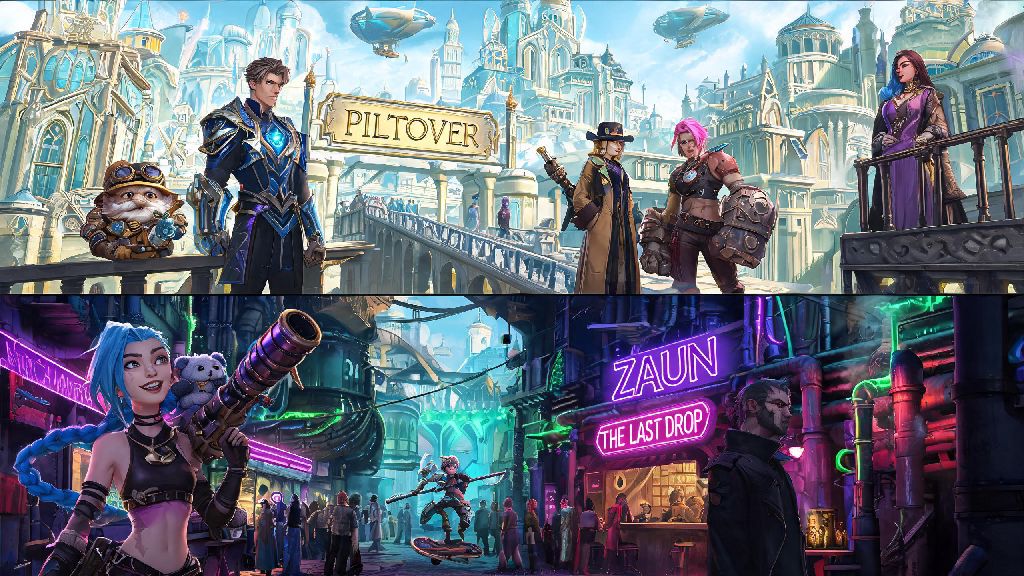
If you binged every episode of Arcane the second it dropped, you probably walked away with a ton of questions about the gritty, vibrant world of Piltover and Zaun. Even if you’ve never touched a League of Legends match in your life, the show’s tight writing and complex characters make it easy to get invested. But if you are a LoL fan, you’ve definitely spotted familiar faces and references that make the story hit even harder. We’re breaking down exactly how is Arcane based on League of Legends, from its core character roots to the small, intentional details that tie the two properties together.
How Is Arcane Based on League of Legends’ Core Champion Backstories?
The most obvious connection between the show and the game is its cast of central characters, almost all of whom have been playable in League of Legends for 10 years or more. Riot didn’t just pull random names and slap them on new characters, either—every core protagonist’s core personality and motivations are pulled directly from established game lore. Every core Arcane protagonist has existed in League of Legends lore for over a decade before the show was released, so long-time fans already had a baseline understanding of who they were going in.
For example, Vi’s brash, protective personality and iconic hextech gauntlets are lifted straight from her in-game bio, as is Jinx’s chaotic, impulsive nature and obsession with causing trouble for Piltover’s authorities. The only major original character added for the show is Silco, Jinx’s father figure and the main villain of the first season. If you’ve ever wondered how is Arcane based on League of Legends beyond just shared character names, these core motivation parallels are the biggest piece of the puzzle.
Hidden Lore Easter Eggs Tied Directly to League of Legends Content
Beyond the main cast, the show is packed with tiny, easy-to-miss details that reference in-game items, abilities, and side lore that only long-time LoL players will pick up on. Riot’s creative team intentionally placed these Easter eggs so they don’t distract casual viewers who don’t know the game, but they add a fun extra layer of depth for fans who have spent hundreds of hours playing matches and reading champion bios. Many background details in Arcane reference in-game items, abilities, and even old champion voice lines.
These small references are another clear answer to how is Arcane based on League of Legends, even if you don’t notice them on first watch. Riot even released a full set of Arcane-themed champion skins for Vi, Jinx, Caitlyn, Jayce, and Ekko right after the first season aired, so players can use the exact versions of the characters they saw on screen in matches.
How Arcane Tweaks League of Legends Canon for Wider Appeal
It’s important to note that Arcane is not a 1:1 exact adaptation of existing LoL lore, and that’s intentional. League of Legends’ lore has been rewritten and retconned dozens of times over the past 14 years, as Riot adjusted character backstories to fit new game updates and events. A lot of the existing lore was also fragmented, spread across short stories, champion bios, animated trailers, and limited-time event pages that many new fans never saw.
Riot streamlined conflicting story beats and filled in plot gaps to make the show make sense for viewers who have never interacted with the game before. Arcane’s changes to canon are officially recognized as part of core League of Legends lore now, not a separate adaptation, so any new LoL content released after 2021 aligns with the story shown in Arcane. You might be surprised to learn that even with these changes, the core answer to how is Arcane based on League of Legends still holds true, as all tweaks align with the core identity of each character and location.
Some long-time fans were initially upset about small changes to their favorite characters’ backstories, but most agree the adjustments make the overall lore far more cohesive and accessible. If you’re new to League of Legends after watching Arcane, you can use the show as a reliable starting point for learning more about Runeterra’s lore instead of trying to dig through 10 years of scattered, outdated content.
The Shared Creative Team Tying Arcane and League of Legends Together
One of the biggest reasons Arcane feels so authentic to LoL fans, instead of like a cheap cash grab adaptation, is that it wasn’t outsourced to a third-party studio with no connection to the game. Riot co-produced the show with Fortiche, a French animation studio that has worked with Riot on League of Legends content for over 10 years, creating dozens of champion trailers, music videos, and event promos before Arcane went into production.
The writing team also included multiple long-time Riot lore writers who have been working on League of Legends story content for years, so they had intimate knowledge of what details mattered most to fans and what could be adjusted for the show. All creative decisions for Arcane were approved by Riot’s core League of Legends lore team to ensure consistency with the game’s world. Even the voice cast has overlap with the game: Vi’s English voice actor in the game also voices her in Arcane, which adds an extra layer of familiarity for long-time players.
This shared team is the final, most important piece of how is Arcane based on League of Legends, as it ensures the adaptation stays true to the spirit of the game millions of people love. It’s also why the show was such a massive hit with both casual viewers and diehard LoL fans, as it balances accessibility with respect for the source material perfectly.
At the end of the day, Arcane works so well because it doesn’t treat its source material as an afterthought, and it doesn’t expect every viewer to be a lifelong LoL player. It balances respect for existing lore with accessible writing that works for anyone who loves a good story. Now that you have a clearer idea of how is Arcane based on League of Legends, you can rewatch the show to spot all the little references you missed the first time, or even dip your toes into the game to spend more time with the characters you fell in love with on screen.