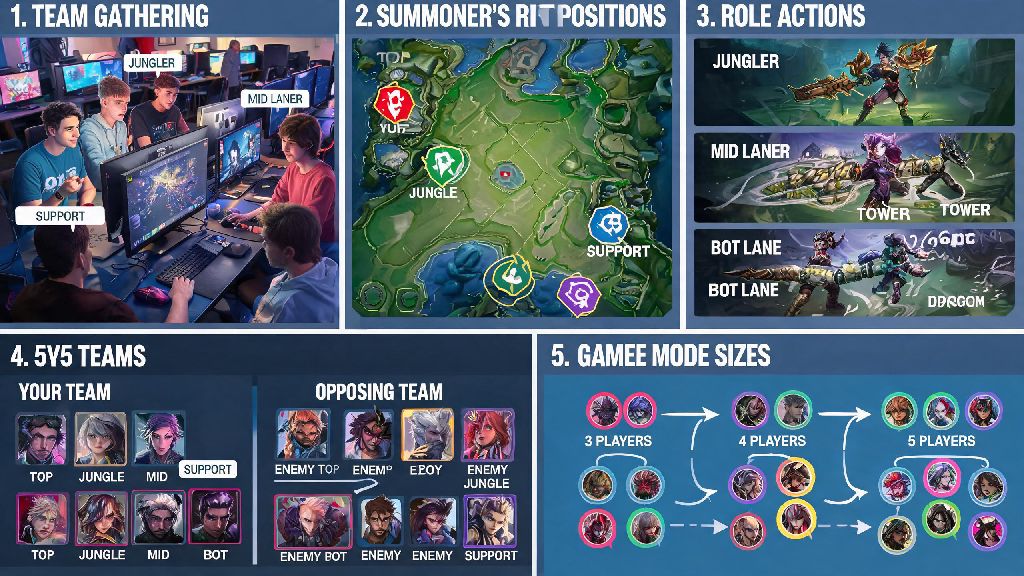
If you’re just dipping your toes into the world of Riot Games’ flagship MOBA, one of the first practical questions you might have is how many players are on League of Legends per match. Most casual fans have heard of the iconic 5v5 format, but the actual number shifts depending on what mode you’re queuing for, who you’re playing with, and even if you’re watching professional play instead of queuing yourself. I still remember my first LoL queue back in college: I had no clue what role I wanted to play, and I spent the first 10 minutes confused as to why there were only 4 other people on my team instead of 10. That confusion is super common for new players, so we’ve put together a full breakdown of all possible team and lobby sizes across every major LoL mode.
How Many Players Are on League of Legends in Standard Game Modes
The standard game mode for LoL is Summoner’s Rift, which is the map used for all ranked play, most casual queues, and professional esports matches. Standard Summoner’s Rift matches have 10 total players, split evenly into two teams of 5. Each team has dedicated roles to cover: top laner, jungler, mid laner, attack damage carry (ADC), and support, so every player has a clear job to do to help their team win. Riot settled on the 5-person team structure after years of testing smaller and larger team sizes in beta, finding that 5 strikes the perfect balance between role diversity and team coordination. You don’t have to play with a pre-made full team of 5, of course. Most casual players queue solo or with one or two friends, and the matchmaker fills the remaining spots on your team with random players of similar skill level. Ranked solo/duo queues limit you to playing with one other friend max, to prevent large pre-made groups from stomping solo players who don’t have a coordinated team.
Team Size Variations for Alternate LoL Game Modes
Not every LoL mode uses the standard 10-player 5v5 structure. Riot regularly releases alternate modes for casual play, plus permanent side modes that cater to players who don’t want to commit to the 30+ minute runtime of a standard Summoner’s Rift match. ARAM (All Random All Mid), the second most popular permanent LoL mode, also uses 10 total players split into two teams of 5, but all players are assigned random champions and fight only on the mid lane, with no jungle or side lanes to manage. Teamfight Tactics, the auto-battler mode built into the LoL client, has a completely different structure, with no fixed teams at all. Limited-time modes often change team sizes to keep gameplay fresh for casual players, so you’ll often see weird and fun team sizes during holiday events or anniversary celebrations. The most common alternate mode team sizes are:
I once queued for a winter holiday snowball fight mode a few years back that used 6v6 teams, and it was absolute chaos in the best way possible. There’s no pressure to learn the meta for these limited modes, so they’re perfect if you just want to mess around with friends without worrying about winning or losing rank.
Esports and Tournament Player Counts for League of Legends
If you’re a fan of watching professional LoL instead of playing, you might also wonder how team sizes work for pro rosters and active match lineups. Professional matches all use the standard Summoner’s Rift 5v5 format, so there are no deviations in active match team size for official Riot-sanctioned tournaments. Each pro team has 5 starting players per active match, one for each of the 5 standard roles. Teams also carry between 3 and 7 substitute players on their full roster, who can be swapped in between games in a best-of series to adjust strategy or cover for sick or underperforming players. For major international tournaments like the League of Legends World Championship, teams are allowed to bring up to 2 extra substitute players for emergency cases, like if a starting player gets sick mid-tournament and can’t play. You’ll see coaches, analysts, and other support staff on the team bench during pro matches, but these roles don’t count as active players, and they can’t communicate with the team once a match starts. If you’re new to watching pro play, counting the 5 players per team can help you follow along with role swaps and strategy changes between games.
What to Know About Queueing With Friends Based on Team Size
Now that you know the standard team sizes for each mode, you can plan your group queues with friends way more easily, instead of showing up with 6 people and realizing you can’t all fit on one team for standard Summoner’s Rift. You can queue with up to 4 friends for standard casual Summoner’s Rift matches, but you’ll need to queue for normal draft or flex ranked if you have a full group of 5, since solo/duo ranked only allows groups of 1 or 2 players. If you’re playing with friends who are brand new to the game, stick to casual modes or Arena first, since ranked queues will match your group against players around the highest rank in your party, which can be overwhelming for new players who are still learning the controls. For smaller groups of 2 friends, Arena mode is the perfect pick, since you only need one other person to make a full team, and matches only last 10-15 minutes on average. If you have a bigger group of 6 or more friends, you can always split into two teams and queue for a custom match, where you can set your own rules and play against each other instead of random players. I do this all the time for group game nights with my college friends, and it’s way more fun than playing against randoms when you have a big group.
At the end of the day, the answer to how many players are on League of Legends depends almost entirely on what mode you’re playing, but the standard 10-player 5v5 Summoner’s Rift format is what most people are referring to when they ask the question. Whether you’re playing solo, with one friend, or with a big group of 6 or more, there’s a LoL mode that fits your group size and playstyle, from casual ARAM matches to competitive ranked play. Don’t be afraid to test out different modes if you’re bored of the standard 5v5 format, you might find a new favorite mode that fits your schedule and group way better than Summoner’s Rift.