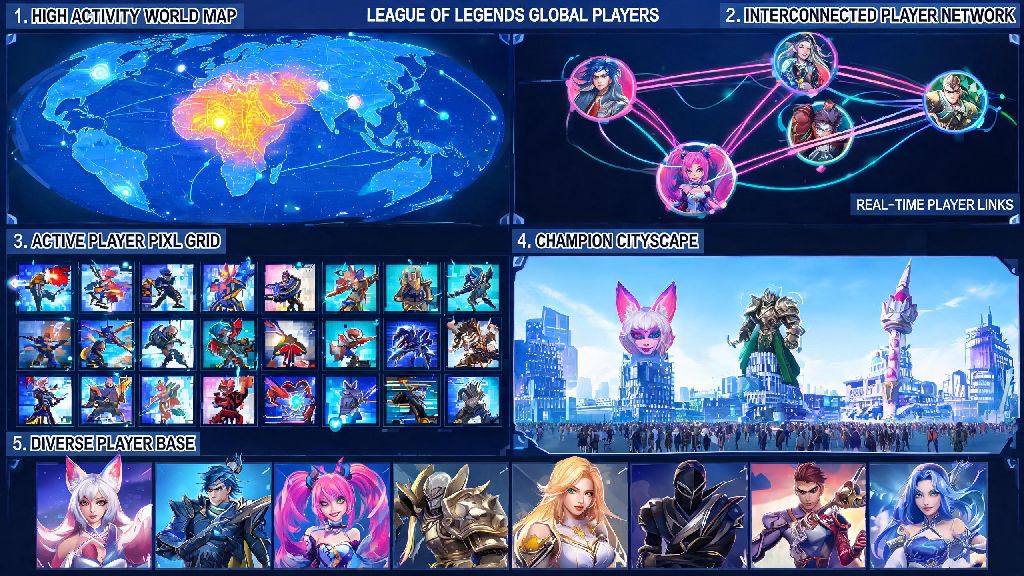
If you’ve ever queued up for a Summoner’s Rift match and wondered how many other people are hitting that “find match” button at the same time, you’re not alone. The question of how many players on League of Legends are active at any given time comes up all the time, from new players testing the waters to long-time fans curious if their favorite game is still going strong. Riot Games’ iconic MOBA has been around for over a decade, and its player base has shifted a lot over the years as new modes, champions, and esports events draw in fresh audiences. We’ve pulled together the latest official and third-party data to give you an accurate, no-fluff breakdown of LoL’s current player count, plus context on what those numbers actually mean for your in-game experience.
How Many Players on League of Legends Are Active Daily and Monthly?
Riot last released official global monthly active player numbers in 2023, reporting 180 million unique players logging in at least once a month across all regions. Third-party trackers that aggregate queue time data, regional sign-up stats, and Riot’s public developer updates estimate that number has grown to roughly 187 million as of 2024. Daily active player counts sit between 15 and 18 million on average, with spikes of up to 23 million during major events like the World Championship finals or the launch of a popular new rotating game mode. This makes LoL one of the top 3 most played PC games in the world, right alongside Minecraft and Fortnite, and it holds the title of the most played MOBA by a wide margin. I’ve noticed queue times for normal blind pick drop to under 10 seconds during peak hours in NA, which lines up with those high active player counts even on weeknights.
Breaking Down LoL Player Count by Game Mode
Not all of those 187 million monthly players are grinding ranked Summoner’s Rift, of course. The player base is split pretty evenly between casual and competitive players, with different modes drawing very different groups of users. Summoner’s Rift ranked and normal play makes up roughly 60% of all active playtime, so that’s the bulk of the player base you’ll interact with for standard matches. ARAM comes in second, making up around 25% of monthly play sessions, especially for players who don’t want to deal with the pressure of laning, macro, or rank climbs. Rotating game modes like URF, Arena, or One for All make up the remaining 15% of playtime, and they often drive big spikes in returning players when they go live. For example, when the fan-favorite Arena mode returned in 2024, Riot reported a 12% jump in daily active players in the first week of the mode’s release. If you only play ARAM, you might see a very different pool of players than someone who only plays ranked, even in the same region, since many players stick almost exclusively to one mode.
What LoL's Player Count Means for Your Matchmaking Experience
Most players don’t care about player count just for bragging rights—they want to know how it affects their games. The first and most obvious benefit of LoL’s massive player base is faster queue times, but there are other less visible perks too. Larger player pools let Riot match you with players of almost identical skill level, so you’re less likely to get stuck in a game with someone way above or below your rank, even in lower elo tiers. Smaller region player counts do create some differences, though. If you play in OCE or LAN instead of larger regions like EUW or Korea, you may notice longer wait times for higher ranks, since the pool of Master and Challenger players is much smaller in those areas. A few other factors affect your personal queue time outside of global player count, too:
Common Myths About LoL's Player Count Debunked
You’ve probably seen those viral TikTok or Reddit posts claiming LoL is dying every other month, but the hard data doesn’t back that up at all. One of the most common myths is that LoL’s player count has dropped sharply since its 2017 peak, but in reality, the player base has grown steadily since 2021, thanks to the success of Arcane, new mode releases, and cross-promotion with other Riot titles like Valorant and Wild Rift that draw new players to the main PC game. Another popular myth is that ranked play is dead, with no one participating anymore. That’s not true either—roughly 40% of monthly active players play at least one ranked match each split, which adds up to over 70 million people playing ranked every year. The only time player count drops noticeably is for a few weeks after a big controversial update, like a major champion rework that’s widely disliked, but it usually bounces back within a month once Riot adjusts the numbers to balance community feedback. I remember when the Durability Patch dropped a few years back, a lot of my friends said they were quitting, but almost all of them were back playing within two months when Riot tweaked the stats to make fights feel more fun again.
At the end of the day, the question of how many players on League of Legends are active has a pretty simple answer: more than enough to keep queues fast, matchmaking fair, and the game feeling alive no matter what mode or rank you play. The game has stayed relevant for over 10 years for a reason, and its massive, diverse player base is one of its biggest strengths. Whether you’re a new player just finishing your first few beginner matches or a 10-year veteran grinding for Challenger, you’re joining one of the largest, most passionate gaming communities in the world. If you ever get curious about up-to-date numbers, Riot occasionally shares public player count updates during their annual developer livestreams, so you can always check there for the latest official data.