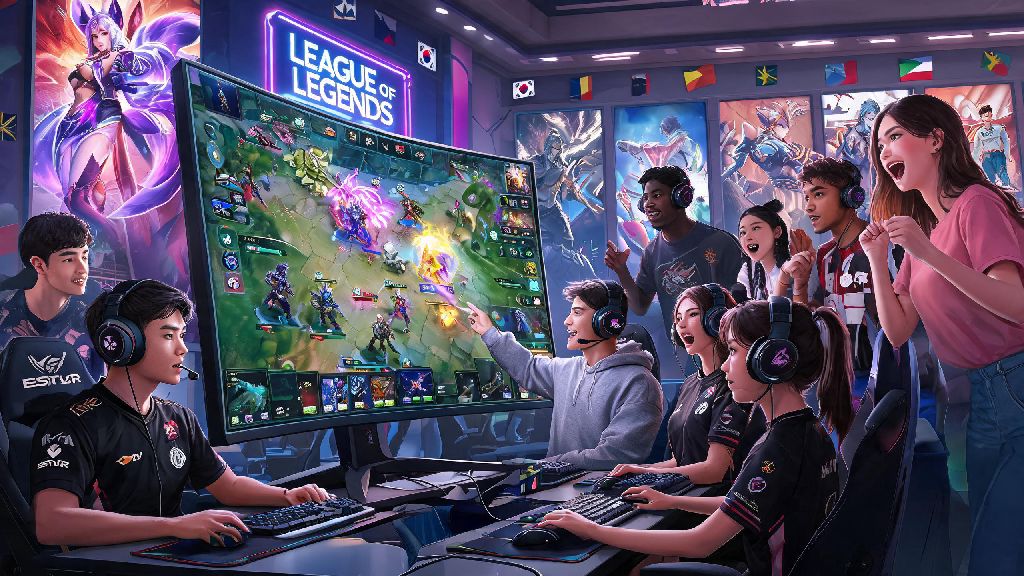
If you’ve ever stepped into a gaming café, scrolled through Twitch’s top categories, or listened to a friend rant about a missed pentakill, you’ve seen League of Legends in action. I’ve been playing on and off since 2014, and I’ve watched the game grow from a niche MOBA played mostly in college dorms to a global cultural phenomenon. But if you’ve ever wondered how popular is league of legends beyond your immediate friend group, you’re not alone. For over 10 years, the title has held a spot at the top of gaming leaderboards, even as flashy new live service games come and go every few months. This post breaks down hard data, cultural impact, and real-world observations to show exactly how big the game really is, and why it’s stuck around for so long.
How Popular is League of Legends by Raw Player Count?
Riot Games doesn’t release exact daily player numbers every quarter, but independent trackers and official annual updates paint a clear picture of the game’s massive user base. As of the latest official data release, the core PC version of League of Legends has over 180 million monthly active users worldwide, with an average of 12 million concurrent players logged in at any given time during peak hours. League of Legends has more monthly active players than the entire population of Germany and France combined.
That count doesn’t even include players of Riot’s spin-off titles tied to the same IP, like Teamfight Tactics, Wild Rift, or Legends of Runeterra. Adding those titles brings the total monthly active users across the Runeterra ecosystem to over 250 million. The game’s player base is spread evenly across most regions, with the largest share in East Asia, followed by Europe, Latin America, North America, and Southeast Asia. Even during slow off-season months when there are no major esports events or in-game events, concurrent PC player counts never drop below 8 million globally.
Esports Viewership Numbers That Outperform Traditional Sports
A huge part of League of Legends’ popularity comes from its global esports ecosystem, which has grown to rival even major traditional sports leagues in viewership and revenue. The annual League of Legends Worlds Championship is the biggest event on the calendar, and the 2023 final drew a peak concurrent viewership of 6.4 million across non-Chinese streaming platforms, with over 160 million total unique viewers worldwide when including Chinese platforms. The League of Legends Worlds final consistently draws more viewership than most major traditional sports championship events outside of the Super Bowl and FIFA World Cup final.
It’s not just the main global events that pull big numbers. Regional leagues like South Korea’s LCK, China’s LPL, Europe’s LEC, and North America’s LCS all draw millions of weekly viewers during their regular seasons, with sponsorship deals from major global brands like Mercedes-Benz, Coca-Cola, and Mastercard. Even smaller events like the Mid-Season Invitational and regional lower-tier tournaments regularly pull in over 2 million peak concurrent viewers on non-Chinese platforms. Many colleges and high schools across the US, Europe, and East Asia now offer official varsity League of Legends esports programs with full scholarships for top players.
Cultural and Social Media Impact That Extends Beyond Gaming
League of Legends’ popularity isn’t limited to people who actually play the game. Its cultural footprint stretches into mainstream media, music, fashion, and even casual conversation, thanks to years of intentional IP building from Riot Games. The biggest example of this crossover success is Arcane, the animated Netflix series based on League’s lore, which won four Emmy Awards after its 2021 release and racked up over 100 million views in its first two weeks on the platform. Arcane's crossover success introduced millions of non-gamers to League of Legends lore and characters.
On social media, the game’s reach is even bigger. The #LeagueOfLegends hashtag on TikTok has over 200 billion total views, with content ranging from gameplay clips and meme edits to cosplay and lore deep dives. Twitch sees over 100 million hours of League of Legends content streamed every month, with top streamers regularly drawing over 100,000 concurrent viewers for their LoL streams. You don’t have to be a gamer to run into LoL references in your daily life, either:
Why League of Legends Has Stayed Popular For So Long
Plenty of live service games launch with massive player counts, but very few stay at the top for over a decade like League of Legends has. A big part of that staying power comes from Riot’s consistent update schedule: the game gets a balance patch every two weeks, a new champion every two to three months, and regular rotating game modes for casual players who don’t want to grind ranked. The skill ceiling for the game is almost infinitely high, so even players who have been around for 10 years still have new things to learn and master. The game's free-to-play model means you never have to spend money to access the full core gameplay, which is a big draw for new players.
The community is another big factor, even with the well-documented issues with toxic in-game chat. Most long-time players stick around not just for the gameplay, but for the friend groups they’ve built through the game, the shared memories of chaotic matchmade games, and the sense of pride that comes with climbing the ranked ladder. I’ve taken multiple breaks from the game over the years, but I always come back either to play with old friends, or to catch a Worlds final with my local LoL watch party group. Unlike many other live service games that push overpriced cosmetic bundles and pay-to-win mechanics to make quick cash, Riot prioritizes long-term player satisfaction over short-term profit grabs. The company’s slow expansion of the Runeterra IP across multiple games and media formats also means that even if players get bored of the core MOBA, they can still engage with the characters and lore they love through other titles.
At the end of the day, the answer to how popular is league of legends isn’t just a number—it’s a global community of players, viewers, and even casual fans who engage with the IP every single day. Whether you’re a hardcore ranked main, a casual ARAM enjoyer, someone who only tunes in for esports events, or even just a fan of Arcane who’s never touched the game, you’re part of that massive community. The game isn’t perfect, but its decade-long run at the top of the gaming industry speaks for itself, and it doesn’t look like it’s slowing down any time soon.