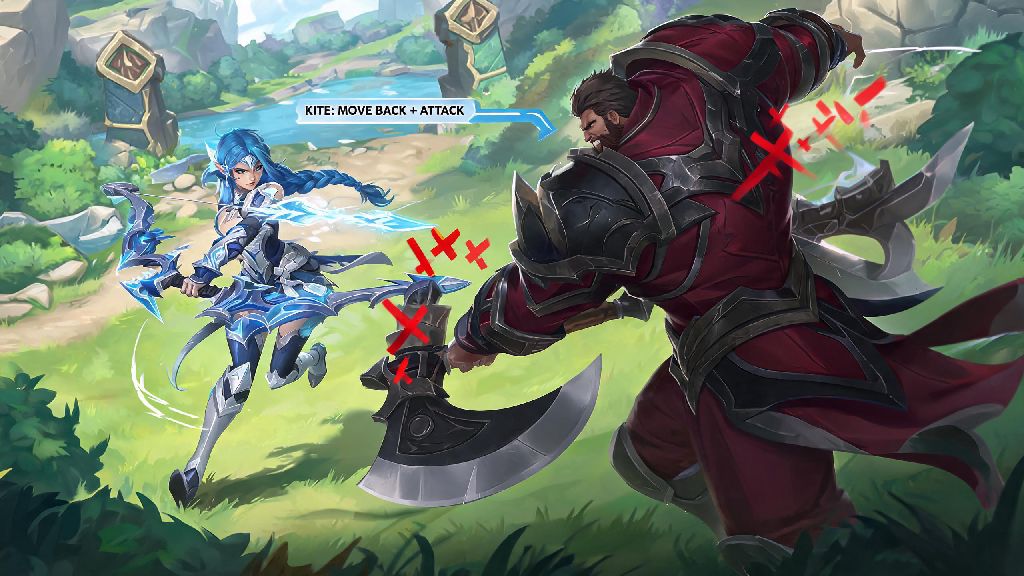
If you’ve ever played an ADC, melee bruiser, or ranged carry in League of Legends, you’ve probably had that frustrating moment where you get collapsed on by a diving assassin before you can land a single extra auto attack. The difference between winning that 1v1 or getting sent back to the fountain often comes down to one core mechanical skill: knowing how to kite in league of legends. Kiting, also called orb walking, lets you deal consistent damage while repositioning to avoid threats, and it’s not just for ADC mains—every role can benefit from mastering it, from ranged top laners to enchanter supports who need to poke safely. I’ve spent 7 years climbing from Bronze to Master maining Jinx and Caitlyn, and I still practice kiting for 10 minutes before every ranked session to keep my muscle memory sharp.
Core Basics of How to Kite in League of Legends For New Players
Most new players assume kiting is a high-skill trick reserved for pro players, but it’s actually a simple mechanic rooted in how auto attacks work. Every auto attack has three phases: windup, damage application, and backswing. The windup is the short animation before your champion deals damage, and you can’t cancel this part without losing the attack entirely. The backswing is the unnecessary animation after damage is dealt, and that’s the part you can cancel with movement to reposition between hits.
That means instead of standing still to fire four autos in a row, you can move 50-100 yards between each hit without losing any damage output. I’ve seen Bronze players with perfect kiting beat Diamond players who rely solely on raw damage to win fights, so don’t write this skill off just because you’re new. For example, if you’re playing Ashe against a Garen, you can land four full autos while kiting backward far enough to avoid his Decisive Smash stun, turning a sure death into an easy kill.
The biggest myth new players buy into is that kiting requires fast clicking. It doesn’t—what matters is timing, not speed. You only need two clicks per auto: one to target your enemy, one to move in the direction you want to go. Rushing your clicks will only lead to misclicks that make you walk into danger or target the wrong enemy.
The Best Control Settings To Make Kiting Second Nature
You can have perfect timing, but bad settings will make kiting 10x harder than it needs to be. The biggest mistake new players make is using only right clicks to kite—right clicking an enemy to attack, then right clicking the floor to move. This works in low-stakes 1v1s, but in teamfights with 10 champions and minions crowded together, you’re almost guaranteed to misclick the floor or a minion when you meant to target the enemy carry.
The fix is switching to attack move commands, which automate part of the targeting process to cut down on misclicks. I used to bind attack move to the A key for years, but switched to my left side mouse button last year and cut my misclick rate by 70% overnight, so don’t be afraid to experiment with binds that feel unnatural at first. These are the settings I recommend for all players, regardless of skill level:
Test these settings in the practice tool for 10 minutes before jumping into a ranked game. It will feel clunky at first if you’re used to right-click kiting, but the adjustment period only takes a few days, and the payoff is worth it.
Pro Kiting Drills You Can Practice In 10 Minutes A Day
You don’t need to grind 10 hours a day to master kiting. Short, focused practice sessions are way more effective for building muscle memory, and 10 minutes a day is enough to see noticeable improvements in 2-3 weeks. The practice tool is the best low-pressure space to build kiting muscle memory, since you don’t have to worry about junglers ganking you or teammates flaming you for missing autos.
Start with the basic stationary drill first. Pick a ranged champion with a clear auto animation (Caitlyn and Ashe are great for this) and spawn a single target dummy at the end of your lane. Stand just outside your auto range, walk into range to fire one auto, then walk backward as soon as the damage number pops up. Repeat this for 3 minutes, focusing on not canceling any autos early. Once you can do 20 consecutive autos without missing, you can move on to the next drill.
The next drill is kiting against a moving target. Set the dummy to move toward you at medium speed, then kite backward while keeping the dummy at the very edge of your auto range. The goal here is to land every auto while never letting the dummy get within 200 yards of you. This simulates kiting away from diving bruisers and assassins in real games, and it also helps you learn your champion’s exact auto range by heart.
For the last 2 minutes of your practice session, spawn three caster minions next to the moving dummy. Practice only targeting the dummy while kiting, ignoring the minions entirely. This mimics chaotic teamfight scenarios where you have to pick out the high-priority target from a crowd. Don’t get discouraged if you mess up a lot at first—most players take 2-3 weeks of consistent practice to stop missing autos while kiting, and that’s totally normal.
Common Kiting Mistakes That Are Costing You Fights
Even players who have the basics down often make small kiting mistakes that lose them fights. Interrupting your auto attack windup is the most common kiting mistake for new players. If you click to move before your champion finishes the windup animation and deals damage, you’ll cancel the auto entirely, and you’ll lose out on valuable damage. So many players focus on moving as fast as possible while kiting that they forget the whole point is to deal damage first, reposition second. If you’re dealing 30% less damage because you’re moving too early, you’re better off standing still for those extra autos.
Another common mistake is only kiting backward. Most players default to moving away from enemies when they kite, but kiting sideways is often far more effective. For example, if you’re fighting a Xerath, kiting backward won’t help you avoid his long-range skill shots, but kiting sideways will let you dodge them while still staying in range to deal damage. You can also kite forward to chase low-health enemies, making sure you land that final auto before they can escape to their turret.
Many players also kite too far away from their targets, putting themselves outside of auto range for seconds at a time. This is especially common with low-range ADCs like Kaisa and Samira, who have to stay closer to fights to deal damage. Take 5 minutes to learn your main champion’s exact auto range, and make a conscious effort to stay within that range while you kite, unless you’re dodging a critical skill shot.
You should always prioritize kiting around the closest high-threat target, not the tank in front of you. A lot of players get distracted kiting away from a low-damage Malphite, while a Zed or Akali is flanking them from the side. If you’re playing a carry, your first priority is to stay away from champions that can one-shot you, even if that means ignoring the front line for a few seconds to reposition.
At the end of the day, learning how to kite in league of legends isn’t about pulling off flashy outplays for highlight reels—it’s about giving yourself more control over every fight, no matter what role you play. You don’t need to be a pro player to master it, either: 10 minutes of practice a day, adjusted settings that work for you, and avoiding the common mistakes we covered will help you see results in as little as a week. Next time you load into a game, try to focus on one small kiting goal for that match, whether it’s not missing any autos in laning phase or kiting away from one diver in a teamfight. Small, consistent improvements add up fast, and you’ll be winning more fights and climbing ranks before you know it.