If you’ve ever queued up for a ranked League of Legends match and wondered why you’re paired with players of wildly different skill levels at first, you’re not alone. Many new players jump into ranked without first understanding what are the ranks in League of Legends, how tiers are structured, and what it takes to move up the ladder. I’ve been playing LoL ranked for almost a decade, climbing from Iron all the way to Diamond twice across two different accounts, so I’ve seen firsthand how confusing the rank structure can be when you’re just starting out. This guide breaks down every tier, how promotion works, common pitfalls to avoid, and what you can expect at each skill level.
What Are the Ranks in League of Legends, Broken Down by Skill Tier
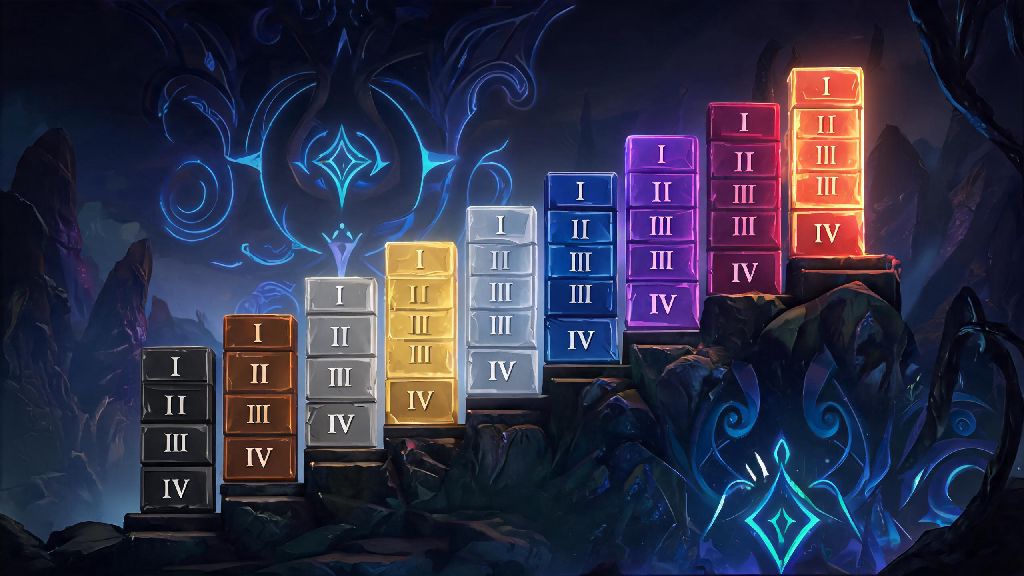
The current ranked system has 10 total tiers, ordered from lowest to highest skill, with the first seven tiers split into four smaller divisions each. Divisions are numbered IV to I, with IV being the lowest in a tier and I being the highest. Once you move past Diamond I, you’ll enter the apex tiers that don’t have divisions, and are instead ordered by total LP (League Points) compared to other players in your region.
The full tier list, from lowest to highest, is Iron, Bronze, Silver, Gold, Platinum, Emerald, Diamond, Master, Grandmaster, and Challenger. Most players fall into the Iron to Gold range, which makes up roughly 70% of the entire ranked player base. The Emerald to Diamond range accounts for another 20%, and the top 10% of players are in Master and above tiers. You won’t be placed into a tier until you complete your 10 initial placement matches, which help the system estimate your starting skill level.
Across all non-apex tiers, the division structure works the same way:
It’s normal to bounce between divisions within the same tier for weeks or even months, especially if you’re still learning core mechanics. I spent almost two entire seasons stuck in Silver II before I finally figured out how to fix my bad roaming habits and move up to Gold.
How the LoL Ranked Promotion System Works
Every ranked win or loss impacts your LP (League Points), the point system that determines when you move up or down divisions and tiers. Most players gain between 15 and 25 LP per win, and lose between 10 and 20 LP per loss, but that number can shift a lot based on your hidden MMR.
MMR (Match Making Rating) is an invisible score the system uses to measure your actual skill level, separate from your visible rank. If your MMR is higher than your current rank, you’ll gain more LP per win and lose less per loss, to help your rank catch up to your actual skill. If your MMR is lower than your rank, you’ll gain less LP per win and lose more per loss, which is a sign you need to focus on improving your core play before you can climb further.
Once you hit 100 LP in a division, you’ll automatically move up to the next division without any extra matches. If you hit 100 LP in Division I of a tier, you’ll enter a promotion series where you need to win 2 out of 3 matches to move up to the next tier. If you lose your promotion series, you’ll drop back to around 70 LP in Division I, and can try again once you get back to 100 LP. For apex tiers, you move up and down based purely on total LP, with Grandmaster reserved for the top 700 players in your region, and Challenger for the top 200.
You don’t have to worry about demoting out of a tier for the first 10 games after you promote, so you can take time to adjust to playing against higher-skilled players without the stress of dropping right back down.
What to Expect at Each Rank Skill Level
Knowing the tier names doesn’t tell you much about what actual play looks like at each level, so I’ve broken down the common traits you’ll see across each rank range to help you set realistic expectations.
In low elo (Iron to Gold), most players are still learning core mechanics like last hitting, ability cooldown management, and basic map awareness. It’s common to see players overextend for kills, ignore objectives, and pick random champions they’ve never played before in ranked. You can climb out of this range pretty quickly by mastering just one or two champions and focusing on taking turrets and dragons instead of chasing kills.
In mid elo (Platinum to Diamond), players have solid core mechanics and basic game sense, but still struggle with consistent decision making. You’ll see more coordinated team play, proper ward placement, and players sticking to their main roles, but you’ll still see plenty of unnecessary fights and bad macro calls. Most players who hit Diamond have at least one champion they’re very comfortable playing, and understand how to play around their team’s win conditions.
In high elo (Master and above), almost every player has mastered their main role and 2-3 main champions, and decision making is the main difference between players. Gameplay is very coordinated, with teams prioritizing objectives above almost everything else, and small mistakes can cost you an entire match. Most pro players and high-level streamers are in Grandmaster or Challenger, and you’ll often see the same small group of players in your lobbies at this level.
Don’t feel bad if you’re stuck in low elo for a while. I spent my first two years playing ranked bouncing between Bronze and Silver, and only started climbing once I stopped blaming my teammates and started focusing on my own mistakes.
Quick Tips to Climb Ranks Faster Without Burning Out
Climbing the ranked ladder doesn’t have to be a frustrating grind, as long as you approach it with the right mindset and habits. I’ve tested dozens of climb strategies over the years, and these are the ones that worked best for me when I was climbing from Gold to Diamond.
The single most effective tip I can give is to one-trick a champion or stick to a small pool of 2-3 champions for your main role. You don’t need to learn every champion in the game to climb, and mastering one champion will let you focus on improving your game sense instead of remembering ability cooldowns or combos. I one-tricked Warwick jungle for three months to climb from Gold IV to Diamond IV, and it cut my grind time in half compared to when I was swapping champions every other game.
Another important tip is to stop playing ranked as soon as you lose two matches in a row. Tilt is the number one reason players lose more LP than they gain, and playing while frustrated will make you make bad decisions you would never make when you’re calm. I used to play 10+ ranked games in a row when I was on a losing streak, and I’d drop entire divisions in one sitting before I finally started forcing myself to take a 30 minute break after two losses.
You should also stop worrying about your win rate. A 52% win rate is more than enough to climb consistently over time, even if it feels slow. You don’t need to win every game, you just need to win one more game than you lose every few days to move up tiers over the course of a season.
Whether you’re just dipping your toes into ranked for the first time or coming back after a long break, understanding what are the ranks in League of Legends is the first step to setting realistic climb goals and enjoying the ranked experience more. You don’t have to hit Challenger to have fun, even moving up one tier a season is a win worth celebrating. Take it slow, focus on improving instead of just winning, and you’ll see progress faster than you think.