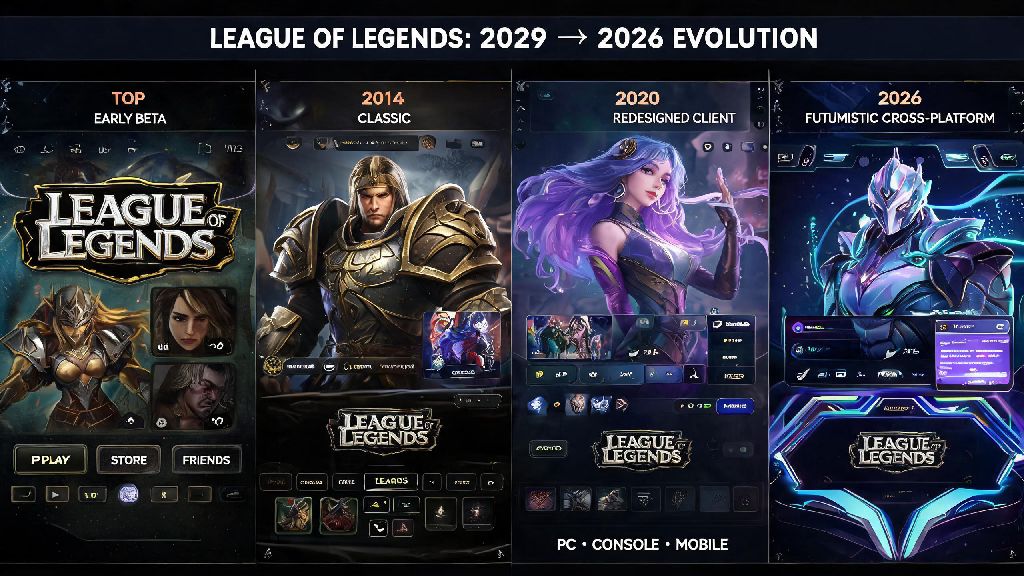
If you’re a new player jumping into Summoner’s Rift for the first time in 2026, or even a long-time fan who’s never bothered to look up the game’s roots, you’ve probably asked at some point: when did League of Legends release? It’s a common question, especially with how much the game has changed over the years, from its clunky early beta interface to the sleek, cross-platform compatible version we play in 2026. I’ve been playing LoL on and off for over 15 years, and I still had to fact-check the exact date last month when my little cousin asked me while we waited for our ARAM queue to pop. This guide breaks down everything you need to know about the game’s launch, common misconceptions, and why its release still shapes the LoL experience you get today.
Let’s Answer: When Did League of Legends Release Officially?
To cut straight to the question: the official global release of League of Legends was October 27, 2009, after months of closed and open beta testing. That means as of 2026, the game is nearly 17 years old, which is almost unheard of for a multiplayer online game that still pulls in millions of active players every single day. The beta versions were only available to a small group of players at first, most of whom were fans of the original Defense of the Ancients mod for Warcraft 3, the game that inspired LoL’s core gameplay loop.
Many people don’t realize that Riot Games, the studio behind LoL, was founded by two DotA modders who wanted to turn the popular custom game mode into a full standalone title. They didn’t have a huge budget at launch, and the original game only had 40 playable champions, compared to the over 170 champions available to play in 2026. The first official launch didn’t even have ranked play, a feature that was added six months later and went on to become the backbone of the game’s competitive scene.
It’s wild to look back at early gameplay footage from the launch era and compare it to what we have in 2026. The original Summoner’s Rift map had far less detail, champion abilities were wildly unbalanced, and there were almost no cosmetic skins to unlock. But the core fun of 5v5 team-based strategy was already there, and that’s what kept players coming back year after year.
How LoL’s Launch Shaped the 2026 MOBA Landscape
Before LoL launched, MOBAs were a niche genre limited to custom game mods for existing titles. There was no major studio putting resources behind the genre, and most players didn’t even know what a MOBA was. LoL’s free-to-play launch changed that entirely, and its success paved the way for every other MOBA that came after it, from Dota 2 to Smite to Mobile Legends.
What made LoL stand out so much at launch, and what still keeps it at the top of the MOBA food chain in 2026, boils down to three key choices Riot made early on:
Even in 2026, most other live service games follow the model LoL pioneered at launch. Regular content updates, fair free-to-play monetization, and investment in competitive scenes are now standard for any multiplayer game that wants to have long-term success, and we have LoL’s early launch choices to thank for that.
Common Misconceptions About LoL’s Release Date in 2026
With so many spin-off titles, regional launches, and beta versions floating around in LoL’s history, it’s no surprise that there are a lot of common misconceptions about its release date, especially among new players who only joined the community in 2026. I see these questions pop up on the LoL subreddit and TikTok comments every single week, so let’s clear them up once and for all.
The most common misconception is that Wild Rift, the mobile and console version of LoL, is the original game. Wild Rift launched for global audiences in 2020, but the core PC LoL release is still the version with the largest player base and full competitive support in 2026. Wild Rift is a great option for players who prefer to game on the go, but it’s not the original release, and its gameplay balance and champion roster are slightly different from the PC version.
Another common myth is that LoL was developed by Valve, the studio behind Dota 2. That’s not true at all. Riot Games has always been the lead developer of LoL, and while the two studios have a shared history with the original DotA mod, they’ve operated completely separately for decades. As of 2026, Riot is a subsidiary of Tencent, but it still has full creative control over LoL’s updates and direction.
Finally, a lot of new players mix up the open beta date with the official release date. The open beta launched a few months before the official release, and anyone who played during that period got special legacy rewards, but the beta isn’t considered the official launch. Never confuse the original LoL release date with spin-off titles like Teamfight Tactics, Legends of Runeterra, or Valorant, all of which launched years after the core LoL game.
Why Knowing LoL’s Release Date Matters for 2026 Players
You might be thinking, “Okay, I know when did League of Legends release, but why does that matter for me playing in 2026?” It’s a fair question, but there are actually a few really practical reasons to learn about the game’s history, whether you’re a casual player or a aspiring pro.
First, if you’re into collecting rare skins or in-game cosmetics, knowing the release date helps you identify which items are truly legacy. Skins that were released in the first two years after launch are some of the rarest and most valuable items in the game, and many of them haven’t been available in the item shop for over a decade. Some of these early legacy skins can sell for hundreds of dollars on secondary accounts (though Riot doesn’t officially support account selling, so be careful if you go that route).
Second, understanding the game’s origins helps you make sense of a lot of the long-running jokes, references, and community lore that are still alive in 2026. A lot of the most popular champion memes date back to the early launch era, and you’ll get way more out of community content if you know the context behind those jokes. If you want to dig even deeper into the game’s early development stories, you can check out Riot Games’ official 2026 timeline of LoL’s development for exclusive interviews and behind-the-scenes content from the original dev team.
Third, if you’re interested in getting into LoL esports, knowing the game’s release date helps you follow the long-running team rivalries and player legacies that make pro matches so exciting. Many of the top coaches and analysts in the 2026 LCS and LEC have been part of the scene since the first official tournaments in 2011, and their strategies are shaped by decades of meta shifts and tournament history. Players who take the time to learn about the game’s early competitive days often have an easier time predicting pro match outcomes and understanding why certain picks are popular in high-level play.
Even if you’re just a casual player who only plays ARAM with friends, knowing the game’s history makes the whole experience feel more connected. You’re not just playing a random video game—you’re part of a 17-year-old community of millions of players around the world.
At the end of the day, the answer to when did League of Legends release is more than just a random date on a calendar. It’s the start of a cultural phenomenon that changed the entire video game industry, created a global esports ecosystem, and gave millions of people a fun way to connect with friends all over the world. Whether you’re just playing your first game of Lux mid in 2026 or you’ve been maining Annie since the beta, that original launch is the reason you get to enjoy all the amazing content LoL has to offer today. Next time you’re waiting for your queue to pop, take a second to appreciate how far the game has come since 2009.